Venture Series Workshops
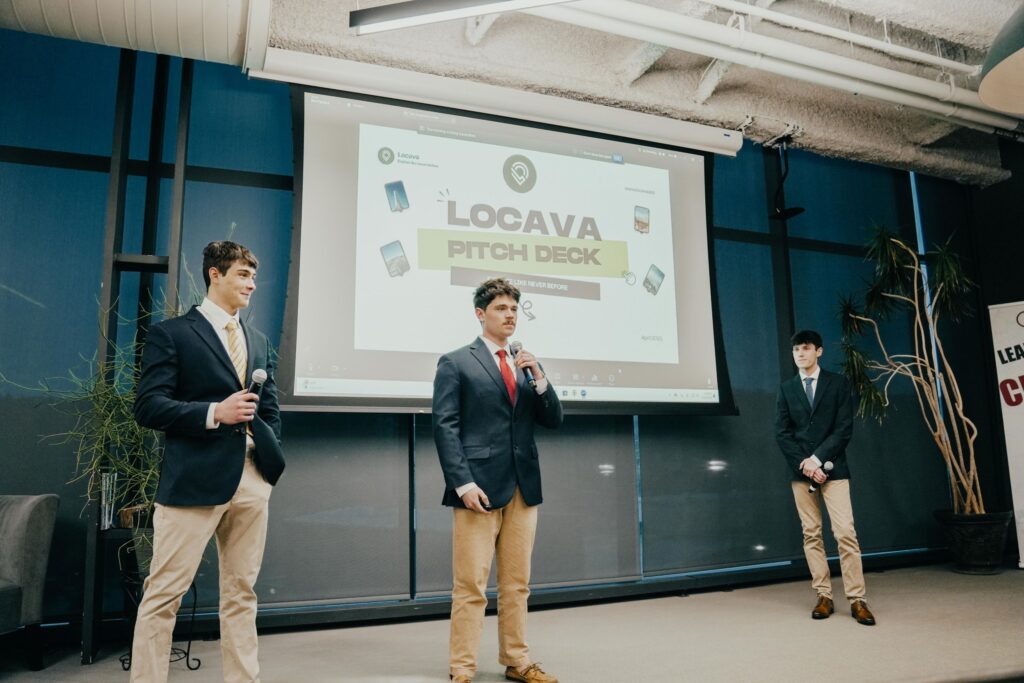
Idea to Impact – Creating a Standout Pitch
In the world of entrepreneurship, a brilliant idea is only as good as its delivery. That’s why the Dyer Center hosted a high-energy workshop led by Director Rita Chesterton to demystify the most crucial skill in a founder’s toolkit: the pitch. This wasn’t just a lecture; it was a blueprint for transforming concepts into capital and conversation into commitment.
Rita outlined the power of the pitch far beyond fundraising, emphasizing how this discipline sharpens communication, boosts confidence, and forces an idea to its clearest, most valuable form.
The session broke down the core elements of a winning presentation:
- Clearly articulating the problem or opportunity.
- Creating a crisp, undeniable value proposition.
- Demonstrating a sophisticated market understanding.
Ultimately, Rita stressed that a great pitch is a great story. It requires knowing your audience and building a narrative flow that hooks them immediately. To put this into immediate action, our First-Year Fellows will soon be tasked with delivering high-stakes, 60-second elevator pitches for real or imagined ventures. Their goal: present the problem, offer the solution, and make a clear “ask.” This hands-on challenge ensures students walk away with the practical tools necessary to command attention and effectively communicate their vision.
.
Business Model Canvas
Continuing the Dyer Center’s Entrepreneurship Workshop series, Director Rita Chesterton shifted the focus from presentation to planning with a dynamic session on the Business Model Canvas (BMC). This powerful visual framework is the essential first step for any founder looking to systematically test and articulate a venture.
Rita kicked off the session by stressing the difference between a static business plan and a flexible business model, showing how the latter allows for rapid iteration and assumption testing. She then demonstrated the BMC’s versatility by walking through three examples of modern, innovative models used by real-world companies.
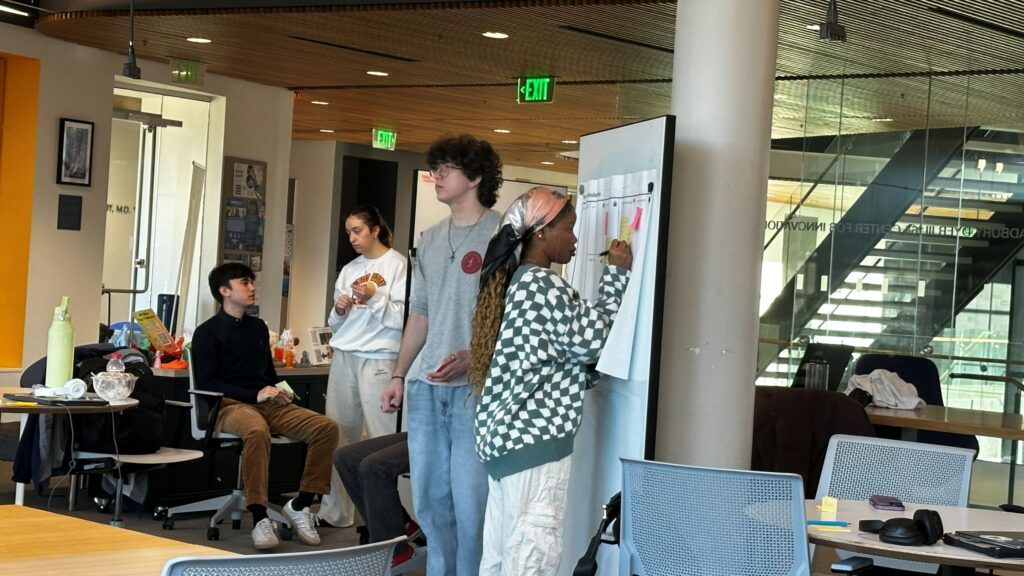
The workshop became truly interactive as students were organized into groups, each armed with a large blank canvas and colorful sticky notes. Rita guided them block-by-block in mapping out a fictional startup: DormChef. Students tackled crucial strategic components, including:
- Customer Segments: Who exactly are we serving?
- Value Proposition: What unique problem are we solving?
- Revenue Streams: How will we capture value?
- Key Partnerships: Who do we need to succeed?
The tactile and interchangeable nature of the sticky notes allowed groups to rapidly innovate, pivot, and visually understand the intricate connections between all nine facets, ensuring a keen focus on achieving product/market fit. The final message was clear: The BMC is not a final document—it’s the dynamic foundation where entrepreneurs test assumptions, learn quickly, and prepare to turn an idea into an enterprise.